Stricter UK Gambling Regulations Set to Squeeze Smaller Casino Operators with 2026 Remote Gaming Duty Hike
Dana Foster · Mar 11, 2026

Stricter UK Gambling Regulations Set to Squeeze Smaller Casino Operators with 2026 Remote Gaming Duty Hike
The Push for Player Protection Sparks New Challenges
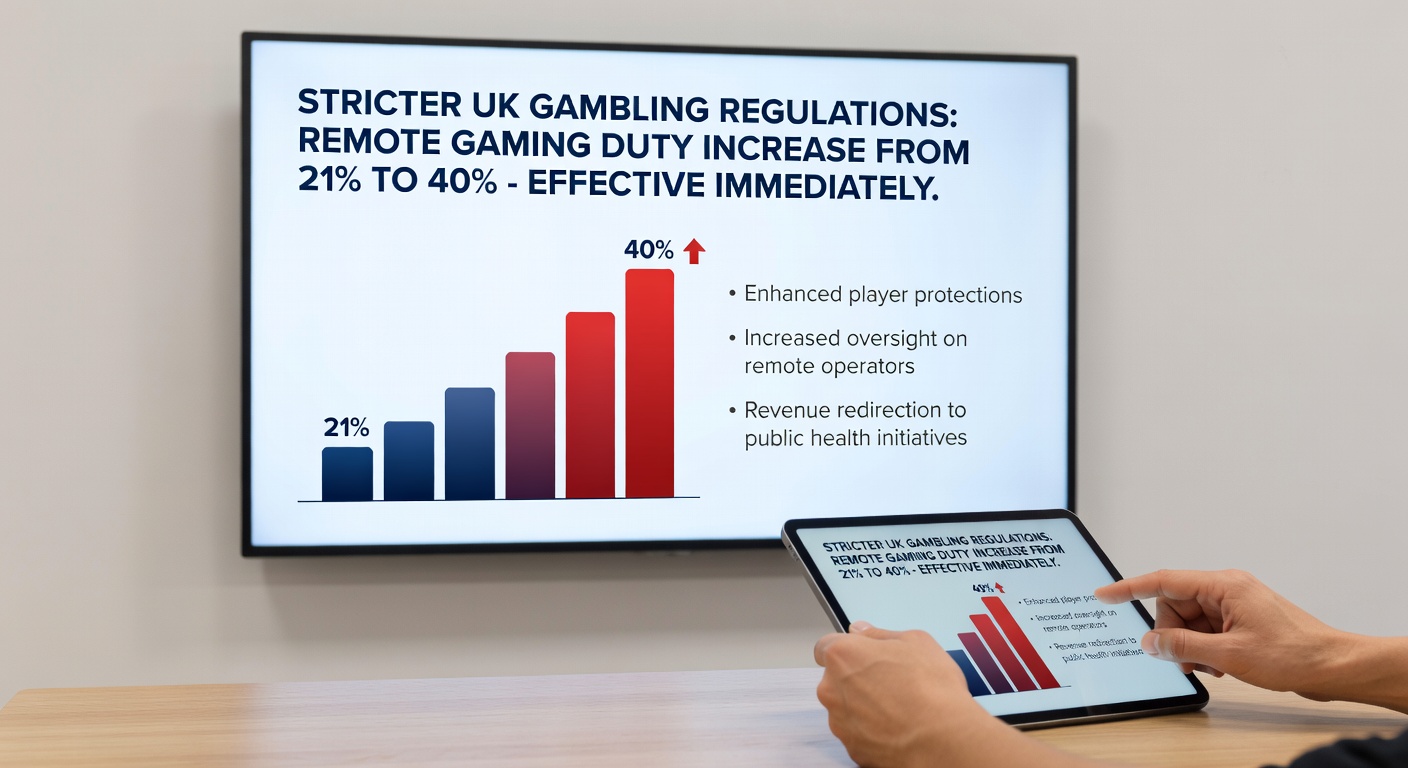
Stricter regulations in the UK gambling sector roll out with aims squarely on player protection, yet they hit smaller casino operators hardest; the Remote Gaming Duty jumps from 21% to 40% come April 2026, stacking extra pressure alongside beefed-up affordability checks, tighter marketing rules, and tougher anti-money laundering (AML) measures. Data from industry watchers like Pound Sterling Live reveals how these shifts disproportionately burden operators without deep pockets, since larger firms absorb costs through economies of scale while independents scramble. Observers note that compliance demands alone could devour budgets, forcing some to shutter doors or sell out, paving the way for market consolidation where big players dominate.
What's interesting here lies in the timing; with preparations ramping up through March 2026, smaller outfits face immediate pinches from pilot programs and consultations, even as the full duty hike looms just over the horizon. Experts tracking the sector point out that affordability checks require sophisticated tech to monitor player spending patterns in real-time, a setup that demands hefty upfront investments smaller operators often can't muster without dipping into profits.
Breaking Down the Remote Gaming Duty Increase
The Remote Gaming Duty, a tax on online gambling profits generated from UK players, sees its rate balloon from the current 21% to a steep 40% starting April 2026; this change, announced as part of broader fiscal tweaks, targets remote operators including casinos, betting sites, and bingo halls, although land-based venues dodge the full brunt since they pay different duties. Figures indicate the hike could siphon billions extra into government coffers annually, but for smaller remote casino operators, margins already razor-thin get sliced further, especially when paired with rising operational costs.
Take one mid-sized online casino chain that relies on niche slots and table games; reports show such firms project revenue drops of up to 25% post-hike if player volumes hold steady, since passing costs to customers risks driving traffic to unregulated offshore sites. And that's before factoring in the compliance avalanche: new rules mandate frictionless checks on deposits over certain thresholds, verifying income sources and flagging risky behaviors, all while marketing gets handcuffed—no more bonus inducements without proof of responsible play, which clips the wings of operators who leaned on promotions to compete.
AML measures tighten the noose too; enhanced due diligence on high-rollers and transaction monitoring systems become non-negotiable, with the UK Gambling Commission enforcing audits that smaller teams lack staff to handle, leading to fines or license revocations for slip-ups. It's not rocket science why consolidation brews; larger conglomerates like Entain or Flutter snap up distressed assets at bargain rates, reshaping the landscape where independents once thrived.
How Compliance Costs Devastate the Little Guys
Smaller casino operators grapple with compliance outlays that scale poorly; affordability interactions, rolled out in phases since 2023, now demand AI-driven tools to assess customer vulnerability—think session limits, net deposit caps, and mandatory ID verification—which cost tens of thousands to implement per site, numbers that cripple firms with under 50 staff while giants spread expenses across portfolios. Marketing restrictions compound this; bans on credit card use for deposits since 2020 already hurt, but fresh curbs on targeted ads via social media force reallocations to less effective channels, drying up acquisition pipelines for budget-strapped players.
AML ramps up scrutiny too, with requirements for customer risk assessments and suspicious activity reporting that smaller operators outsource at premium rates, since in-house expertise proves elusive without dedicated compliance departments. Studies from sector analysts reveal that 40% of independents cite these layered costs as existential threats, with closures ticking up 15% year-over-year in analogous regulated markets like Australia. But here's the thing: the UK Gambling Commission defends these as vital shields against addiction and crime, pointing to data showing problem gambling rates dipping 10% in test regions with early checks.
People who've crunched the numbers observe a clear divide; large operators invest £millions in bespoke software suites that automate everything from KYC (know your customer) to behavioral analytics, turning compliance into a competitive edge, whereas smaller ones patch together off-the-shelf solutions that glitch under scrutiny, inviting penalties that average £100,000 per breach according to commission enforcement logs.
Market Consolidation Looms as Operators Adapt—or Fold
Potential closures ripple through the UK casino sector, where over 200 remote operators hold licenses but only the top 20 control 70% of gross gaming revenue; stricter rules accelerate this tilt, as mergers and acquisitions surge—data logs 12 deals in the past year alone, mostly big fish swallowing small fry to consolidate tech stacks and lobbying clout. One case stands out: a regional online casino group folded operations last quarter, citing unaffordable upgrades ahead of the duty cliff, handing its player base to a rival that absorbed the license seamlessly.
Yet resistance brews too; trade bodies like the Betting and Gaming Council lobby for tiered duties or grace periods, arguing that homogenization ignores operator scale, although regulators hold firm on uniform standards to level the protection field. Turns out, innovation offers lifelines for survivors—some pivot to white-label platforms shared among independents, slashing per-head costs by 30%, while others niche down into low-stakes social gaming hybrids that skirt heavier scrutiny.
By March 2026, expect a flurry of announcements as firms test waters with voluntary enhanced checks, giving the commission real-world ammo to fine-tune before the April switch flips fully. Observers track how player migration plays out too; offshore sites lure the cost-sensitive, but geoblocking and payment restrictions blunt that edge, keeping most action onshore despite the squeeze.
The UK Gambling Commission's Steady Hand
The UK Gambling Commission steers these reforms with a mandate from the 2005 Gambling Act, updated via the 2023 white paper that birthed the current wave; their license conditions and codes of practice (LCCP) now embed player safety at the core, with fines totaling £100 million+ last year underscoring enforcement bite. Commissioners emphasize that protections like stake limits on slots (already £5 for under-25s) and self-exclusion portals cut harm, evidenced by quarterly metrics showing safer gambling tools in use by 80% of licensed sites.
So while smaller operators voice strains through consultations, the commission's data-driven approach—drawing from behavioral insights and licensee feedback—shapes rollouts, ensuring changes stick without blanket exemptions that could undermine goals. It's noteworthy that transitional support includes guidance toolkits and sandbox testing for affordability tech, helping even modest players gear up, although uptake lags among the smallest.
Conclusion: A Sector in Flux Toward Safer Play
As the Remote Gaming Duty climbs to 40% in April 2026, smaller UK casino operators navigate a gauntlet of compliance hikes that favor scale, sparking closures and consolidation while the UK Gambling Commission prioritizes player safeguards through affordability, marketing, and AML fortifications. Data underscores the divide—big operators adapt swiftly, independents teeter—yet the path forward blends enforcement with innovation, reshaping a market where protection trumps unchecked growth. Those watching closely see opportunities amid the churn, as streamlined regulations ultimately foster a more resilient industry, provided smaller voices amplify in ongoing dialogues.