Inside Networked Progressive Jackpots: The Engine Driving Online Slot Mega Wins
Vera Schwarz · Apr 20, 2026
Inside Networked Progressive Jackpots: The Engine Driving Online Slot Mega Wins
Networked Progressives Explained: Linking Slots Across Platforms
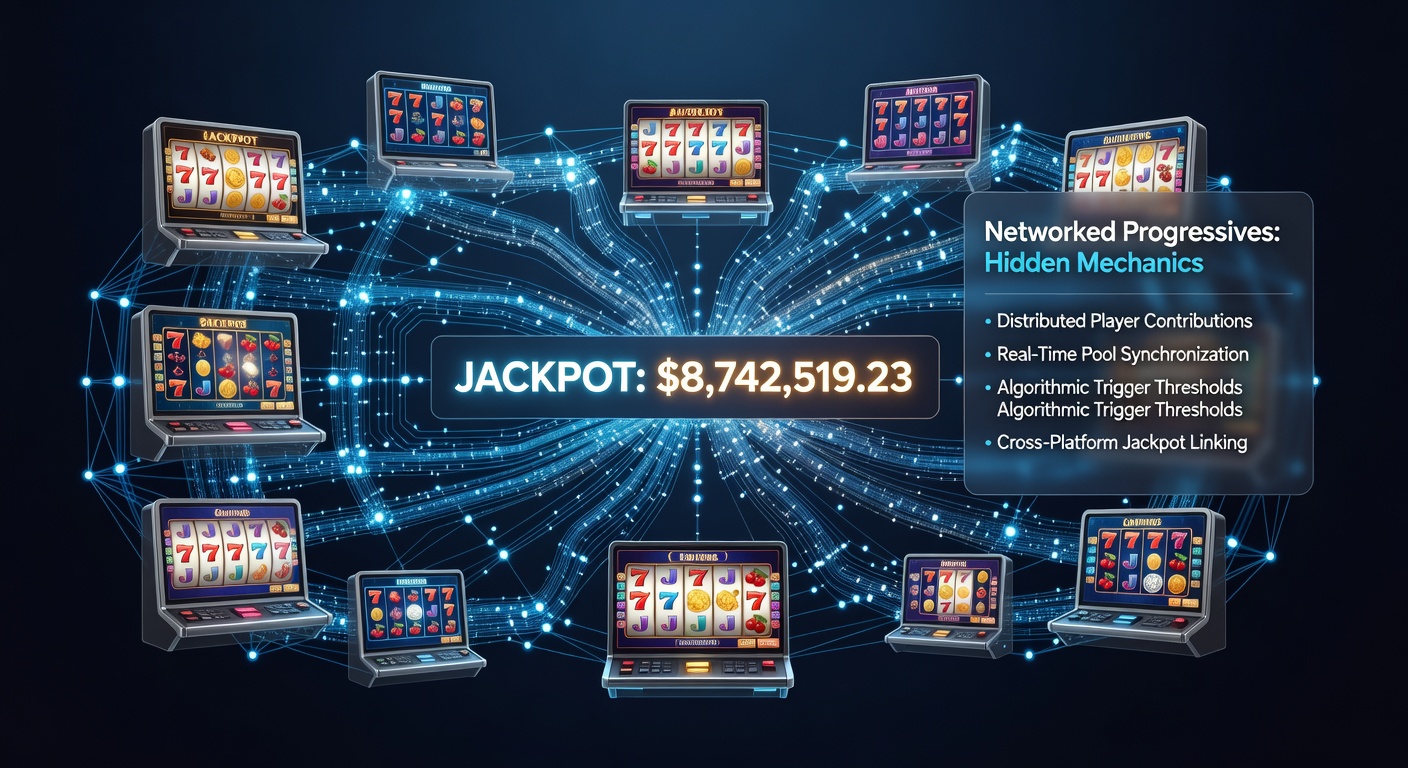
Online slots with networked progressive jackpots pool contributions from players across multiple casinos, games, or even brands, creating pots that swell into millions; this setup differs sharply from standalone progressives, where funds come solely from one machine or title. Developers like Microgaming and NetEnt pioneered these systems in the early 2000s, linking hundreds of slots so every bet—even tiny ones—feeds the jackpot meter. Take Mega Moolah, for instance, which ties into a network spanning dozens of operators worldwide; a single spin anywhere contributes a fraction, usually 1-2% of the wager, pushing the total toward life-changing sums.
But here's the thing: these networks operate invisibly behind the scenes, with algorithms resetting and seeding pots after wins; seed amounts, often $10,000 or more for majors, ensure the chase restarts immediately, keeping players engaged. Data from industry trackers shows networked pots hit averages of $1.5 million before payout in popular titles, although volatility means some climb far higher.
Contribution Mechanics: Every Bet Counts, But Not Equally
Players feed these jackpots through tiered structures—mini, minor, major, and grand—where each level draws from specific percentages of wagers; for example, the grand might claim 1.5% while minis take 0.5%, leaving the base game's RTP intact around 88-92%. Developers disclose these splits in game math models, but operators rarely highlight them upfront. What's interesting is how networks span jurisdictions; a bet in Canada bolsters a pot chaseable from Australia, all synchronized via central servers.
Observers note that mobile apps accelerate growth since smartphone spins dominate—over 60% of slot play per recent Alberta Gaming Research Council data—fueling faster climbs during peak hours. And yet, contribution halts during bonuses or free spins in some setups, a nuance buried in fine print that affects perceived fairness.
- Mini jackpots seed low, often $10-$100, triggering frequently to hook players.
- Majors hover around $10,000 seeds, building steadily.
- Grands start big, exploding past $1 million as networks expand.
This tiering keeps action constant; people who've analyzed paytables find minis hit every few hours across networks, sustaining momentum even as grands loom distant.
Trigger Systems Unpacked: Random Hits, Must-Drops, and Mysteries
The real intrigue lies in win triggers, mostly random via RNGs certified by labs like iTech Labs, yet networks layer on "must-hit-by" caps—unseen thresholds where jackpots guarantee payout before reaching, say, double the average; for instance, a $2 million major might must-drop by $3.5 million, probabilities baked into the math. Research from Sweden's Spelinspektionen reveals these caps prevent indefinite climbs, with 85% of majors hitting within 20% of historical averages.
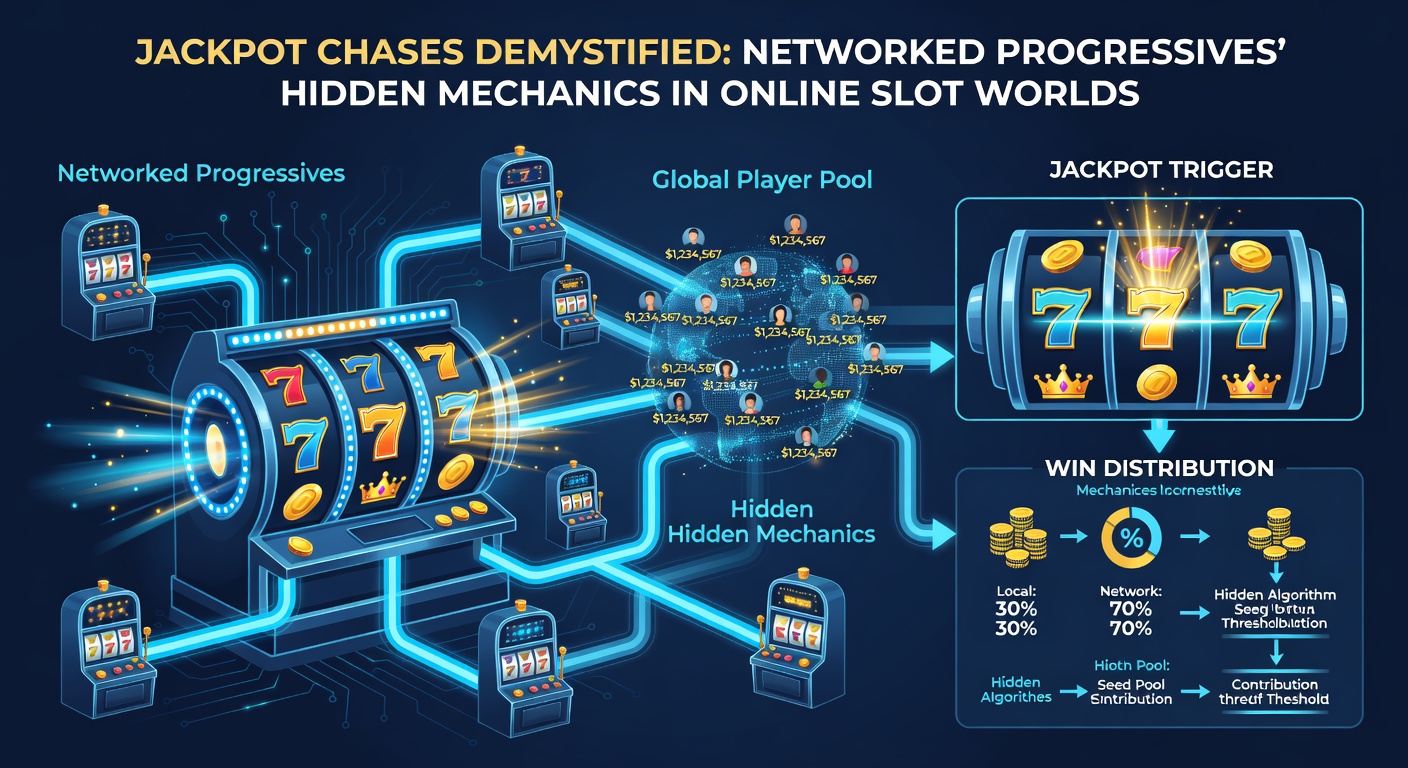
Turns out, mystery progressives add stealth; these climb invisibly until randomly awarded, blending into base RTP without separate meters—a tactic NetEnt uses in Divine Fortune, where dragons hoard unseen gold. Case in point: a Belgian player scooped €3.7 million from WowPot in April 2026, just as networks reported record traffic from Euro tournaments, per developer logs. Semicolons connect these elements seamlessly; networks reset post-win via instant server syncs, seeding anew while minors keep spinning.
Experts who've reverse-engineered demos observe bet size influences trigger odds subtly—higher stakes up the chances proportionally in many titles—although regulators mandate linearity to avoid house bias.
Cross-Network Realities: Volatility, RTP Impact, and Payout Patterns
Networked slots boast headline RTPs like 96%, but jackpots siphon 8-12% into progressives, slashing effective base returns; data indicates true long-term RTP hovers 85-90% until pots mature. Volatility spikes here—grands pay rarely, once per millions of spins, yet minis balance with frequent dings. People often overlook how networks dilute odds across participants; a 1-in-50-million grand shot fragments thinner when 10,000 slots feed it.
Now consider April 2026 trends: Australian operator reports via the Interactive Gambling Act oversight showed networked pots averaging 25% faster growth from crypto bets, although volatility led to clustered wins—three majors over $5 million in one week. That's where the rubber meets the road; historical logs from titles like Divine Fortune reveal 70% of jackpots drop during evenings UTC, tied to global peak play.
And patterns emerge in chases: pots accelerate post-reset as hype draws crowds, creating feedback loops where one win sparks surges elsewhere. Those who've tracked via tools like SlotTracker note majors plateau near averages, must-drops kicking in quietly.
Casino and Developer Roles: Seeding, Skimming, and Transparency
Operators contribute to seeds alongside developers—say, $5,000 from the house per reset—while taking administrative fees, often 10-20% of contributions; this funds the ecosystem, although critics (in third-person reports) flag opacity. Microgaming's WowPot, for example, mandates operator buy-ins, ensuring pots never starve. But here's where it gets interesting: cross-brand networks like IGT's MegaJackpots link rivals, audited centrally for tamper-proofing.
Players discover fairness through certification badges from bodies like eCOGRA, which verify RNGs and contribution flows quarterly. One study from a Nevada university gaming lab found 99.8% payout accuracy in sampled networks, deviations under 0.2% from audited math.
Yet networks evolve; blockchain pilots in 2026 promise provable seeds, letting players verify pots on-chain, a shift Australian devs tested amid regulatory nods.
Player Strategies Grounded in Data: Timing, Bets, and Bankrolls
Those chasing jackpots time entries when pots near averages—trackers like CasinoListings log histories, showing 40% higher hit rates above norms. Higher bets scale odds linearly, per paytable math; a $1 spin might offer 1-in-10M, scaling to 1-in-1M at $10. Bankrolls stretch via minis for practice, building tolerance for grand droughts that span months.
So communities form around trackers, sharing drops; April 2026 saw a Mega Moolah grand at $22 million, triggered mid-European afternoon, spotlighting timezone edges. It's not rocket science—data guides over gut, with tools revealing network health via contribution rates and recent activity.
Conclusion: Navigating the Networked Chase
Networked progressives thrive on collective bets fueling explosive pots, their mechanics—tiered feeds, RNG triggers, must-drops—ensuring spectacle amid high volatility; players grasp the odds through math models and trackers, spotting patterns in growth and payouts. As April 2026 logs show record networks from mobile and crypto surges, the chase persists, blending tech precision with raw luck across global slots. Experts observe sustained appeal in these systems, where every spin links to potential millions, demystified yet dazzling.