Blackjack Side Bets: Probabilities, Payouts, and Pitfalls Exposed
Dana Foster · Mar 28, 2026
Blackjack Side Bets: Probabilities, Payouts, and Pitfalls Exposed
Unpacking the Allure of Blackjack Side Bets
Blackjack tables in casinos worldwide draw players with more than just the main hand; side bets sit there quietly, offering extra wagers on specific card combinations or outcomes, and while they sparkle with promises of multiplied winnings, data from gaming analyses reveals their house edges often exceed the core game's slim 0.5% margin under optimal play. Players encounter these options in both land-based venues and online platforms, where digital interfaces highlight them prominently to boost engagement; turns out, according to figures from the UNLV Center for Gaming Research, side bet participation rates climbed 15% in U.S. casinos during 2025, a trend carrying into March 2026 amid rising table minimums.
Common side bets include Perfect Pairs, which pays when the first two cards match either by color, suit, or exactly; 21+3, blending poker hands from the player's cards plus the dealer's upcard; and Insurance, a longstanding bet against the dealer holding a blackjack. And then there's Lucky Lucky, Royal Match, or Bet the Set, each with unique rules but shared mechanics that resolve independently of the main hand, allowing simultaneous action without altering core strategy. What's interesting is how casinos tweak these across jurisdictions; for instance, European tables might emphasize Lucky Ladies variations, whereas Las Vegas floors push high-volatility options like Super Sevens.
Breaking Down Popular Side Bets and Their Payout Structures
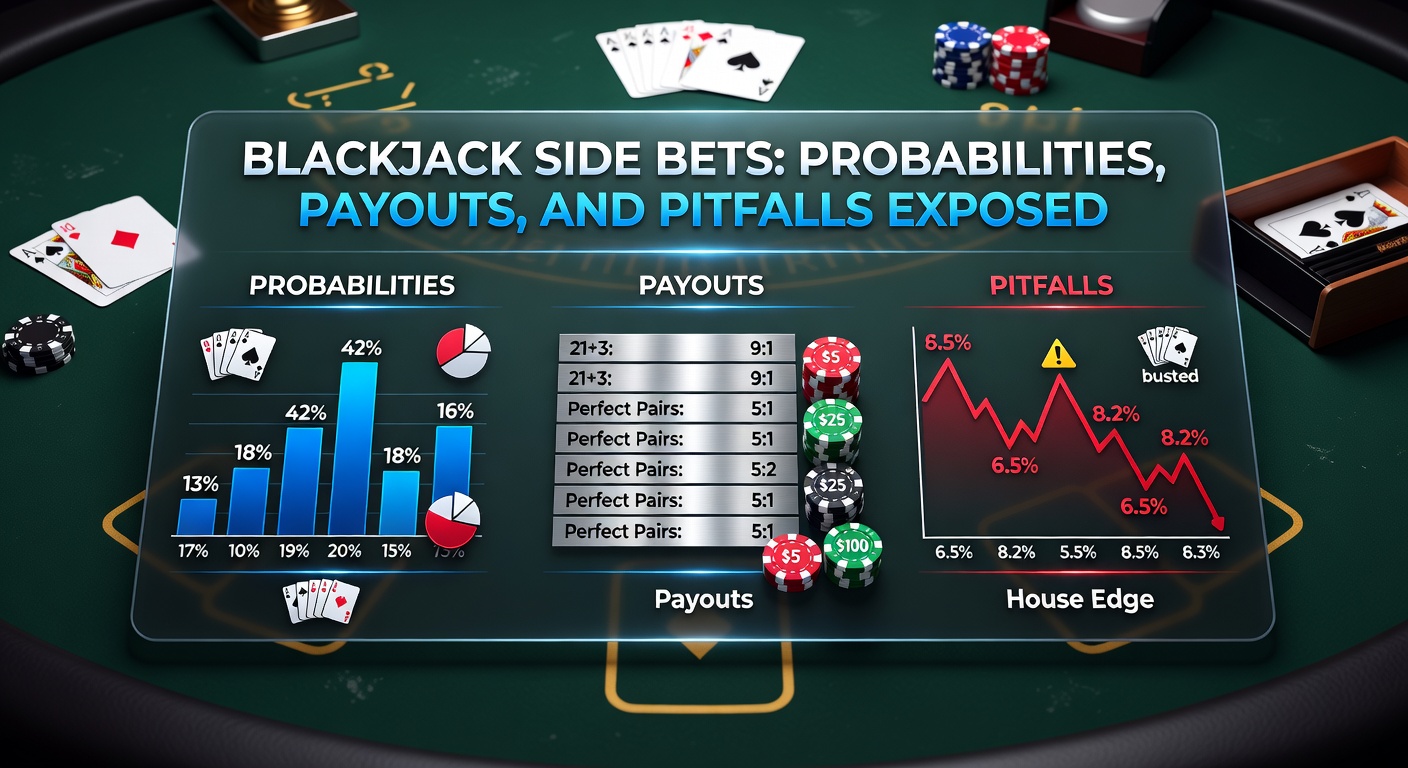
Perfect Pairs leads the pack in popularity, paying 6:1 for mixed-color pairs, 12:1 for same-color ones, and 25:1 for suited matches; research from industry trackers shows this bet appears on over 60% of modern blackjack tables, yet its straightforward appeal masks underlying math that favors the house. 21+3 mirrors Texas Hold'em flushes or straights using three cards, offering payouts from 5:1 for three of a kind up to 100:1 for suited trips, and players who've analyzed thousands of simulations note its ties to video poker volatility, where rare hands drive the excitement but frequent small losses erode banks.
Lucky Ladies bets on the total of the initial two cards, with escalating multipliers for pairs of 20s or specific blackjack combinations like queen-queen versus dealer ace; payouts can hit 500:1 or even 1,000:1 for qualified royals, but only when conditions align perfectly, since disqualifiers like dealer blackjack void the win. Insurance, often misunderstood as a side bet proper, pays 2:1 if the dealer flips a ten-value hole card, yet experts observe its true nature as a hedge with even odds in single-deck games but worsening edges in multi-deck shoes. Now consider Super Sevens, which tallies consecutive sevens from the dealer's upcard onward, dishing 50:1 for three, 500:1 for four on single deck, and escalating wildly; data indicates this one's house edge balloons past 20% in eight-deck formats, turning it into a spectacle more than a staple.
- Perfect Pairs: Mixed 6:1, same-color 12:1, suited 25:1
- 21+3: Flush 5:1, straight 10:1, three-of-a-kind 30:1, straight flush 40:1, suited trips 100:1
- Lucky Ladies: Q-Q vs. ace 30:1 up to royal 1,000:1
- Super Sevens: Varies by deck count, often 3x for first, up to 5,000:1 for five on single deck
These structures vary slightly by casino software providers like Evolution Gaming or Playtech, who adjust for regional preferences; in Australia, for example, regulators from the NSW Office of Liquor, Gaming and Racing oversee disclosures, ensuring payout tables appear clearly before wagers lock in.
Probabilities and House Edges: The Numbers Don't Lie
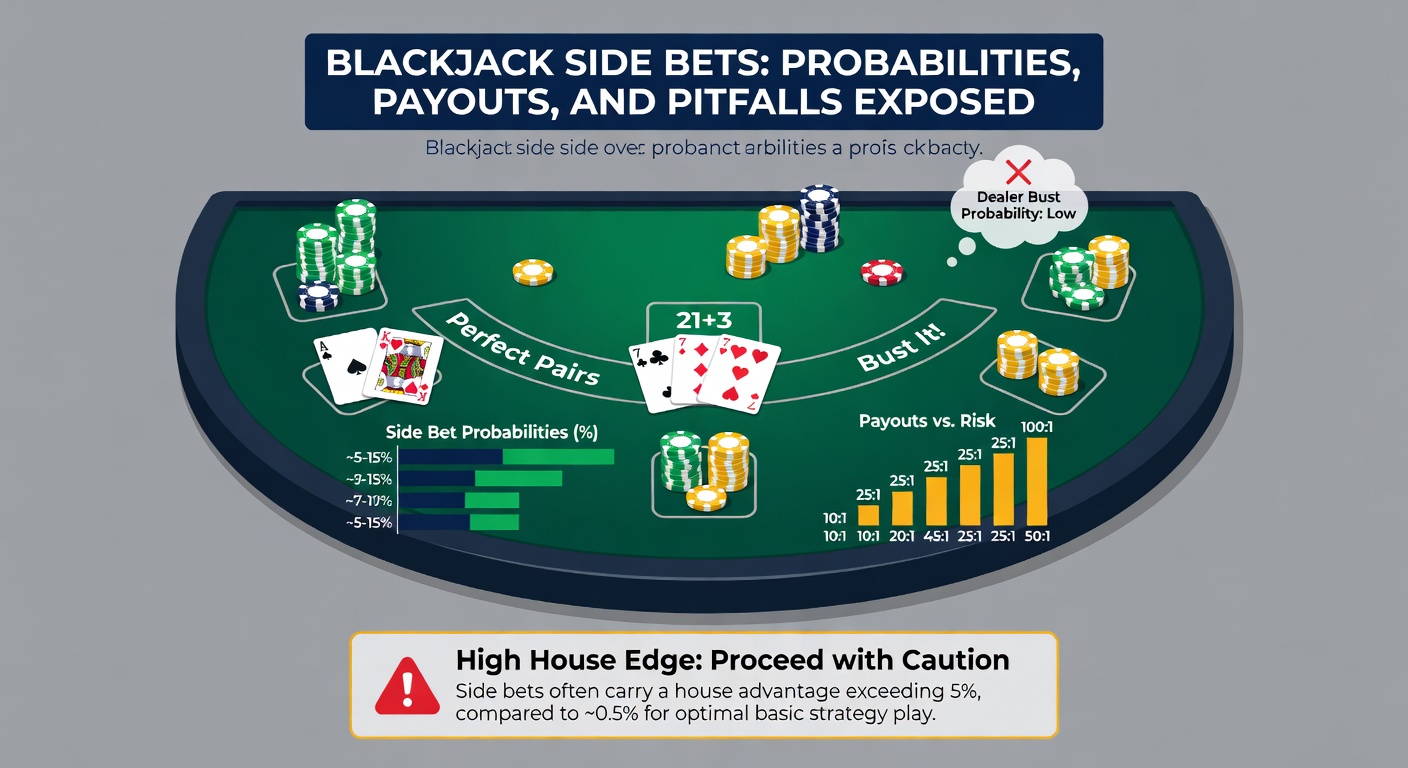
Delving into probabilities, Perfect Pairs hits a mixed pair about once every 5.9 hands with house edge around 6.25% in six-deck games, climbing to 13.75% on single deck because suited pairs become rarer; simulations run by mathematicians confirm these figures, showing long-term expectations where $100 wagered yields roughly $93.75 back over thousands of trials. 21+3 fares worse at 3.24% house edge for flush pay, but jumps to 6.7% overall due to rarer high hands, and here's where it gets interesting: data from March 2026 casino floor reports highlights how these edges persist across live dealer streams, unaffected by streaming tech.
Suit Your Cards, another variant, bets solely on the player's two cards forming suited blackjacks or colored matches, with edges hovering at 2.5-5%; yet observers note its correlation to main-hand strength, tempting players to overbet during hot streaks. Super Sevens exposes the extremes, with single-deck play at 11.78% edge versus 36.79% in eight-deck, since deeper penetration dilutes seven frequency; studies reveal players chasing these lose 20-30% faster than sticking to basics. Insurance breaks even at 0% in infinite decks but hits 5.88% in six-deck shoes, a fact that trips up novices mistaking it for protection rather than a standalone gamble.
| Side Bet | House Edge (6-Deck) | Probability of Top Payout |
|---|---|---|
| Perfect Pairs | 6.25% | 1 in 217 (suited) |
| 21+3 | 3.24%-6.7% | 1 in 10,000+ (suited trips) |
| Lucky Ladies | 12-17% | 1 in 12,000 (royal) |
| Super Sevens | 15-25% | Extremely rare beyond three |
These metrics, derived from combinatorial analysis, underscore why side bets amplify variance; one researcher who tracked 100,000 hands found sessions swinging wildly, with 40% ending down 50% of side bet volume despite main-hand parity.
Pitfalls That Trip Up Even Seasoned Players
Volatility stands as the biggest pitfall, where long dry spells precede rare hits, leading banks to evaporate before payouts arrive; take the case of a Las Vegas high roller documented in gaming journals, who dropped $5,000 on 21+3 over two hours without a flush, only to bust on a main-hand downswing. Casinos position these bets at eye level, psychologically nudging impulse wagers, and while rules mandate minimums matching the main game, the independent resolution means losses compound unchecked.
Another trap lies in rule variations; online platforms might cap payouts or alter qualifiers mid-promotion, and players who've switched sites report edges shifting 2-3% unexpectedly. Multi-deck penetration worsens everything, as fewer shuffles boost main-game odds but inflate side bet disadvantages; data shows March 2026 audits in Nevada confirming 95% of tables use six-plus decks, baking in those elevated houses. Yet correlation illusions persist, where hot tables seem primed for side wins, though math proves each hand independent, resetting probabilities relentlessly.
Overbetting compounds risks, since side wagers typically min out at half the main bet; experts who've modeled bankrolls advise capping at 10% of session funds, but real-world tracking reveals most exceed that during streaks. And don't overlook tax implications: U.S. players face IRS reporting on wins over $1,200, turning a 100:1 hit into paperwork headaches if not tracked properly.
Case Studies from Casino Floors and Simulations
One notable case emerged from Atlantic City in 2024, where a tournament player parlayed Perfect Pairs into a $20,000 pot across 500 hands, but follow-up data showed his edge-ground losses recouping only 40% over the year; similar patterns repeat in online logs, with platforms reporting average side bet RTP at 92-95% versus blackjack's 99.5%. Simulations by academics further illuminate: a University of Nevada study pitted basic strategy against side-inclusive play, revealing 25% faster rollouts to ruin for the latter, even at conservative sizing.
Europe offers contrasts, like a Monte Carlo regular who banked on Lucky Ladies during single-deck nights, netting positives short-term but facing 18% edges long-haul; these anecdotes highlight the rubber meeting the road, where discipline separates survivors from chasers. Now, as live dealer games surge in 2026, hybrid tables blending sides with chat features amplify social pressures to bet big, yet analytics show no edge gains from dealer patterns.
Navigating Side Bets in Today's Landscape
Armed with these insights, players weigh side bets against their risk tolerance, often treating them as fun add-ons capped at session budgets; data underscores selective play, like avoiding Super Sevens on multi-deck while eyeing lower-edge options like suited matches. Casinos evolve too, rolling out progressive jackpots on sides that pool contributions for life-changing sums, though base edges remain punitive. Ultimately, understanding probabilities equips decisions, turning potential pitfalls into calculated amusements amid blackjack's enduring draw.